heart Home About Me Contact Reviews Friday Contests heart
Showing posts with label guest post. Show all posts

Tuesday, August 21, 2018

QSR Guest Post: Four Queer Books by Queer Authors


Hey, Scouts! We've got a really nifty guest blog from Kellie Doherty today! Take it away, Kellie!


Hello everyone! My name’s Kellie Doherty, and I love reading queer science fiction/fantasy books. I bet you do, too! I always enjoy finding new reads, so to that end, here are my top four queer SFF books by queer authors. Hope you find something new to check out!

The Temple at Landfall – Jane Fletcher

The Temple at Landfall by Jane Fletcher is an oldie but goodie. Published in 2005 by Bold Strokes Books, it was my first foray into f/f fiction, and that’s why it makes my recommendation list. Fletcher delivers a fast-paced, character-driven story in a world literally filled with lesbians. It’s a combination of science fiction and fantasy, though it sways more into the science fiction realm, and the plot is a fun and easy read. Lynn, an imprinter who can create new life, feels like a prisoner in the temple. Her last chance to see the outside comes rolling around in the form of relocation to the temple at Landfall, and she’s thrilled for the opportunity to travel. It’s a dangerous journey, though, and one filled with temptation, especially a lieutenant named Kim Ramon, an officer in the squadron of Rangers assigned to protect her. It’s such a fun read, and one that has a sweet f/f romance in its core. I’d recommend this book for anyone who’d like an easy read.

Tengoku – Rae D. Magdon

One of the great things about being a freelance editor is that you get introduced to new books you may have missed. That’s how I found Tengoku by Rae D. Magdon. Published in 2016 by Desert Palm Press, Tengoku follows the story of two main characters: Aozora Kaede, a “lady of autumn” on the run after being forced to flee from home, and Homura Imari, a “lady of a different court” and the daughter of a daimyo. When Imari meets Kaede, Imari decides to ask Kaede for a favor: guide her to Hongshan where a blacksmith lives who Imari hopes can replace her missing left hand. The romance between the main characters—a disabled bisexual woman and a badass trans woman—is sweet, believable, and weaves well within the other aspects of the story. The dialogue is quick and funny, the characters are interesting and well rounded, and story is rich. Plus—and this is the best part for me—the setting is Japanese inspired and I love, love, love that. I’ve always been fascinated by Japan and to read a fantasy story immersed in that culture was a joy for me. I’d recommend this book for anyone looking for an exciting Japanese-inspired read.

The Long Way to a Small Angry Planet – Becky Chambers

The Long Way to a Small Angry Planet by Becky Chambers follows the story of Rosemary Harper, a young woman looking for adventure, and the motley crew of the Wayfarer. The crew includes a reptilian pilot named Sissix , engineers Kizzy and Jenks, and their captain Ashby (among others!). Rosemary’s travels with them are funny and dangerous and odd and lovely and everything in between. Published in 2016 from Harper Voyager, this scifi story really centers on the crew, the interactions between them, and the drama that inevitably bursts forth when in tight quarters. It’s an easy read, one that I breezed through in two days, and would happily go back to. The queer aspect of this book is diverse but understated in a way that suggests being queer in this universe is no big deal, and I really love that about the story. Chambers also has the ability to craft an exciting plot that also has a relatable undertone of friendly and romantic relationships, too. I would recommend this book to anyone looking for a light and quick scifi read.

A Darker Shade of Magic – VE Schwab

I had to include A Darker Shade of Magic by VE Schwab because she is one of my newest favorite authors and the queer characters in this book (and the rest of the trilogy) are exciting and relatable. Rhy, a prince, is a ridiculously charming and funny bisexual. Alucard, a sea captain, is gay and mysterious and fabulous. Lila, a thief, is seen as gender-queer, though she doesn’t outright say so. In this story, there are four different Londons—White, Red, Gray, and Black—that each have varying amounts of magic, and Kell can travel between them. When a trinket from Black London (a London supposedly dead) comes into Kell’s possession and another traveler comes looking for it, Kell has to work with Lila to hopefully bring the trinket back to Black London before its power corrupts everything. The story has lots of action to keep it moving, the characters are dynamic and fun, and the descriptions are freaking amazing. Seriously, amazing. I read A Darker Shade of Magic in a day, I was that engrossed by the story. I would highly recommend the book (and trilogy!) to anyone looking for a unique fantasy world and a fast-paced read.

So there you have it, my top four queer novels written by queer authors. Have you read any of them? If so, which one was your favorite? If not, what are you waiting for? Go check them out!

Kellie Doherty has a masters in book publishing from Portland State University. Her debut science fiction novel Finding Hekate was published by Desert Palm Press in 2016, and the sequel Losing Hold came out in 2017. Currently, she's working on a five-book fantasy series, and the first book Sunkissed Feathers & Severed Ties will be out in November 2018. During the day, she’s an office assistant at the State of Alaska, and by night she's crafting adventures full of magic and daggers...and maybe a few dragons, too. She’s been featured in Flight and Impact (Queer Scifi/Mischief Corner Books, 2016, 2018), 49 Writers Alaska Shorts, Pathos Literary Magazine, F Magazine, and Alaska Women Speak, among others. Find her at her website, on Facebook, or on Twitter.

Thanks for the post, Kellie!

Peace and popsicles,
Laina

Tuesday, August 29, 2017

QSR Guest Post: Reading as a Queer Teen

Well, August is almost over, but QSR isn't quite yet!! Our giveaway is still open and we still have a couple more things this week before we're done, finishing up with our final twitter chat on Thursday.

One of those things is this awesome guest post from Kav! Everyone say hi to them!


I’m a nonbinary, biromantic, asexual teen. Basically, I’m as queer as it gets. Growing up, I never really saw that in media, but now, being an active member of the diverse book community, I always know when there’s a new queer release and jump on it immediately. To be honest, that’s one of the best decisions I’ve ever made. Reading queer books, and diverse books in general, has improved my reading life so much that I actually cannot read non-diverse books usually. Reading queerly has not only given me the opportunity to see myself represented, but it has given me the opportunity to learn about others.

On my social media and YouTube channel, I talk a lot about how representation has helped me, how it has made me less alone and more normal. While all of that is true and is important to talk about, I believe it’s also important to discuss how representation has helped me understand others. By seeing stories of people unlike myself, I gain a better understanding of the challenges and triumphs they experience - often in relation to their culture, gender, religion, romantic/sexual orientation, and more. I particularly enjoy reading #OwnVoices - a story written by an author who shares the same identity as the main character - stories of people unlike me because those give me the opportunity to see a personal account of that person’s life. Now, I could choose to read the history books written by privileged people who have no understanding of that person’s life and omits queer history completely, or I could read the underrated YA novels that are both enjoyable and educational and some of the most important pieces of media I’ve consumed.

For example, over the summer, I read Saints and Misfits by S.K. Ali, a story about a hijabi Muslim teen who was sexually assaulted. I can relate to zero of those elements, but that book has become one of my favorite books of all-time because of how it taught me about a culture and experience that I’ve never experienced. Now, that wasn’t a queer example, so let’s take another book - We Are Okay by Nina LaCour. We Are Okay is a story that deals heavily with themes of grief and loss and shows a past f/f relationship with blurred lines and no real labels. Again, I cannot relate to those experiences. I have experienced grief in my life, but never of that magnitude. I have never been in a f/f relationship and have never been in a relationship with lines as blurred as that one. Reading We Are Okay gave me the opportunity to see someone else’s story and understand their experiences.

Seeing yourself represented is so important and a privilege no one can take for granted, but so is reading someone else’s story.

Kav is a 15 year old nonbinary, biromatic, asexual, South Indian teen who loves media, books, and social justice. They are frequently active on Twitter and YouTube talking about a combination of book-related and social justice-related topics.


Thanks so much for your post, Kav! We're so glad to have you posting here.

Leave them a nice comment Scouts, okay?

Peace and cookies,
Laina

Thursday, August 17, 2017

QSR Guest Post: Sex Repulsed Aces in Fiction

Hey Scouts! Please welcome Tabitha to the blog! This is a post I think you guys are going to find really interesting. I know I do!

Growing up, I never saw anyone like me in fiction—a sex-repulsed asexual person. This left me basically thinking I was the only person on the planet who hated the thought of ever having sex. So it’s amazing to now get to read about characters who actually have similar feelings to mine; it means so much to finally see myself reflected in stories. Here are a few sex-repulsed/averse ace characters who have especially resonated with me (all of whose names, coincidentally, start with “N”):

Nevian from City of Strife by Claudie Arseneault

When I started this book, I knew there were several ace characters, but it was still a pleasant surprise to discover that Nevian was a sex-repulsed ace almost as soon as he was introduced: “Nevian didn’t know who she was trying to impress with that. Not him, he hoped. He had no interest in these things—not with her, and not with anyone. The thought had always made him recoil a little.” I appreciate that his specific orientation is made so clear—he doesn’t just lack interest in sex, but actually has an aversion toward it.

And then this later encounter made me smile:
Nevian jumped back as if the door had burned him. Why was the High Priest naked in the middle of the day? Then he heard a woman’s stifled giggles, and Varden hushed her. The door snapped shut and they shuffled inside. Nevian would never understand that kind of desire—he had never even experienced attraction and doubted he one day would—and physical proximity unnerved him. He waited, wishing people were more reasonable about this whole sex thing. Because, really? The middle of the day?
Having been regularly forced to overhear my former neighbors doing certain… things… at random times like 10AM or noon, I am completely with Nevian here. I haven’t seen many characters who are uncomfortable with being aware of others’ sexual activity (although Nadin is another one—see below!), but that is my experience, and it was exciting to find a character who shares it.

Nadin from Fourth World by Lyssa Chiavari

Like Nevian, Nadin is also disconcerted at witnessing others’ sexual desire on display:
The man said something I couldn’t hear and pulled the woman close. She giggled and draped herself around him, her hands snaking up under the tight fabric of his shirt. I grimaced and pulled the hood of my cloak further over my face.
[…] “They were just being affectionate,” [Isaak] said.
“You mean that didn’t”—I paused, struggling to find the right word—“bother you?”
“No. Honestly, it’s the first time since I've been here that I've seen anyone act human.”
I glared at him. “How is that what makes someone human?”
Sex scenes in movies = me covering my eyes and asking when it’ll be over. You’re not the only one it bothers, Nadin! (And yay for her calling out the idea that sex makes us human!)

Later, her boyfriend initiates a passionate kiss for the first time, which completely freaks her out. When she expresses her discomfort, he gets upset:
He pushed away from me, getting to his feet. “I’m sorry, Nadin,” he said, his voice impossibly small. “I thought… I thought you loved me, too.”
I jumped up after him. “I do love you!” I protested.
“Then why don’t you—” I flinched, and he lowered his volume. “Why don’t you want me?”
When society equates love with sex, and when even other aces often emphasize that asexual people can still have sex to please their partners, it’s powerful to me to see a character who isn’t able to just go along with sexual activity for their partner’s sake—not that there’s anything wrong with choosing to do that, if it is indeed a choice, but I wouldn’t be able to make myself, and I relate to Nadin because she can’t either.

Niavin from Sinners by Eka Waterfield

I fortunately don’t relate to Niavin’s experiences too much, as he’s been through a lot worse than I have because of his sexuality, but I certainly understand his feelings:
He could never desire anyone and yet he simply had to. He was the last of his House, and it depended on him to survive. Children were rare among the sidhe; the union needed to be a formal marriage blessed by the Queen, and even then it would take countless nights, countless decades of copulation. Niavin would have to endure that. His aunts and uncles and nephews had fallen to war and duels and other misfortunes, and the House had to go on.
I felt so alone growing up because the adults around me talked as if everyone got married and had children someday—it was just inevitable, just what people did. But Niavin, like me, knows that making babies is not for him (and fortunately, he gets out of getting married). I also really appreciate that by the end of the book, he knows there’s nothing wrong with that: “He did not need the flesh of another to be happy, that much was for damn sure.”

Trigger warnings for these books:
  • City of Strife trigger warnings
  • I don’t know of an official list of trigger/content warnings for Fourth World, but the second scene I quoted contains a description of a non-consensual kiss. Nadin also grapples with feelings of brokenness after that encounter.
  • Sinners trigger warnings
Tabitha is an ace vegan feminist who loves thinking and talking about representation in media. One of her short stories with an ace main character has appeared in Vitality magazine. You can find Tabitha on Twitter @tabithawrites and on Wordpress at tjoconnell.wordpress.com.

Thanks for joining us, Tabitha!!

Peace and popsicles,
Laina

Wednesday, August 16, 2017

QSR: Giveaway!!


Hey everyone! Who likes giveaways?

(If you don’t, this post probably isn’t for you :P)

I’m giving away a queer book for up to 15€ from Book Depository and a sticker from Queer Enough :)

You have to be 13 or older if you want to enter, and you need your parents’ permission if you’re a minor. Only entries submitted through Rafflecopter will be counted. The book has to be queer, and own voices books would be great. Book Depository and Queer Enough have to ship to you.

a Rafflecopter giveaway


Good luck and happy reading!

xoxo
Lucia

Tuesday, August 15, 2017

QSR: Jasmine Gower Interview

Hi everyone! We have Jasmine Gower over for an author interview today :D

Q. Tell us a little about your books!

I’ve got two books coming up that I’m very excited about. First is my fantasy romance novella, A Study of Fiber and Demons, which is being published by Less Than Three Press in ebook and paperback on August 9, 2017. It’s a polyamorous enemies-to-lovers story about a group of bitter academics who have spent their whole careers sabotaging each other and find themselves assigned to work together on the same research project studying demon magic.

I also have Moonshine coming in February 2018 from Angry Robot, also in ebook and paperback. Moonshine is set in a fantasy 20s-esque world during a magic prohibition and focuses on Daisy Dell, a young flapper and secret mage who gets a job working in an office for a shady boss.

Q. What made you write the stories you did? What do they mean to you?

I actually went into Fiber and Demons with a specific set of things I wanted to incorporate into the story: a female asexual character, a rivals-to-lovers storyline, and polyamory. I think the main character, Alim, was also inspired by my disappointment in another series I read that featured a queer-coded Arab character that never committed to making his queerness explicit, although I wasn’t really consciously thinking about that when I started writing Fiber and Demons.

Moonshine was more directly informed by things going on in my own life. I had just gotten my first Real Job out of college and was finding that I didn’t really understand the purpose of the work that I was being asked to do, which got me thinking about a character who has similar misgivings about her workplace that turns out to be a front for an illegal magical moonshining operation. (My job just turned out to be generic exploitative capitalists getting me to train my own replacements so they could underpay them even more than they underpaid me. Not quite as fun.) But that was where Daisy’s story in Moonshine came from. Her boss, Andre, has his own storyline that was inspired by my experiences as an aromantic reader looking to see more non-romantic intimate relationships explored and celebrated in fiction.

Q. What are some of your favourite things to read in queer books?

I’m pretty excited for any queer content in books, provided that it doesn’t involve queer people needlessly suffering Because Queer. Some things in particular that I’d really like to see more of, though, are non-binary characters who are human (not aliens, not shapeshifters, etc.), characters that don’t require dedicated romance subplots to establish their orientations (whether it’s because the character is ace/aro or just a gay, bi, or pan person who happens to be single the whole book), and more intersex characters in general.

Q. Got any fun summer reading plans?

I’ve been trying out my local library’s ebook lending for the very first time, which has so far involved getting started on Daniel José Older’s Bone Street Rumba series, so I’m hoping to get all caught up on that. I’m also reading Keith Yatsuhashi’s Kojiki, which I’ve been dying to read since I saw the cover for its sequel, Kokoro. (Kojiki and Kokoro are both published by Angry Robot, and they had just revealed the cover for the second when I started getting into talks with them about publishing Moonshine, and seeing Kokoro's beautiful cover got me really excited to work with Angry Robot for my own book.)

Other than that, I’m really in the mood for some epic high fantasy, but I’ve got so much editing to do this summer that I don’t have a lot of room to add more to my reading list.

Q. Tell us one of your favourite experiences with someone who’s read your book.

My romantic heroes in A Study of Fiber and Demons are not exactly… heroic. They are quite terrible and rude, in fact. After one of my friends finished reading it, the first thing she said to me (in sheer delight) was, “These are the worst characters you’ve ever written.” Interestingly, my editor had a similar reaction. I guess the new rage in romance is embittered middle-aged academics.

Q. I want queer vampires to become a thing in 2020. What is a thing you would love to see in queer books in the future?

I’ll second the call for queer vampires. My favorite series of all time is a vampire-hunting high fantasy, but the queerness of the characters is pretty aggressively subtextual, and that series ended two years ago, anyway. There’s such an extensive (and honestly kind of ugly) history of vampirism as a symbol of queerness, and the advent of Twilight kind of reassigned vampires to heteronormativity just as they were starting to be culturally regarded as sympathetic. I think we’re long overdue to reclaim vampire symbolism, and thankfully I think the vampire oversaturation caused by Twilight and its imitators is starting to wear off and publishers are becoming more open to vampire stories again.

Q. What queer book are you looking forward to?

I’ve been kind of drifting away from YA lately, but I’m pretty excited for the upcoming Mask of Shadows by Linsey Miller. I’m a sucker for thief-slash-assassin archetypes, as well as genderfluid characters. Admittedly, that second category is one I see a lot less of in fantasy.

Q. What’s something you always want to say in interviews but no one ever asks?

In 2014 I was in a documentary called Gaming In Color, which is about queer gamers. They interviewed me at the premiere GaymerX convention while I was in full cosplay as Anders from Dragon Age II.

Q. Favourite summer drink?

My favorite cocktail is a Honey Jack Lemonade (lemonade with honey whiskey), which is really a summer-specific kind of drink. But I’m also partial to just regular lemonade.

Q. Favourite frozen summer treat?

I’m an Oregonian, so of course I’m partial to Tillamook Dairy’s marionberry pie ice cream.

Jasmine Gower is from Portland, Oregon, where she studied English literature at Portland State University. Jasmine was drawn toward writing years before amidst a childhood of fantasy novels and 90s video games and has a passion for exploring themes of gender, sexuality, and disability through the conventions of speculative fiction and fantasy worldbuilding. Find her at jasminegower.com, on Twitter @Jas_Gower, and on tumblr as jasgower.tumblr.com.

Thank you so much for joining us!

xoxo

Lucia

Tuesday, August 8, 2017

QSR Guest Post: 5 Queer Nonfiction Books

Hey Scouts! Please welcome the one and only Lucia to the blog! Tell them how awesome they are, okay?

Hi everyone! August has finally arrived, and with it four prompts to have fun with. I know nonfiction is hard for some people, so here’s a list of cool books that you could read for the nonfiction prompt:

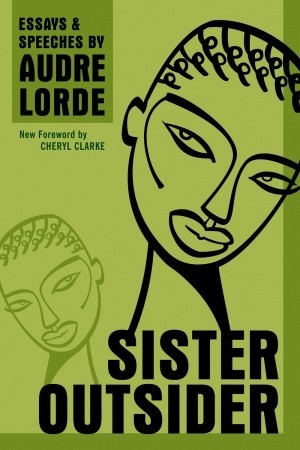
Sister Outsider by Audre Lorde

A collection of fifteen essays written between 1976 and 1984 gives clear voice to Audre Lorde's literary and philosophical personae.

These essays explore and illuminate the roots of Lorde's intellectual development and her deep-seated and longstanding concerns about ways of increasing empowerment among minority women writers and the absolute necessity to explicate the concept of difference—difference according to sex, race, and economic status.

The title Sister Outsider finds its source in her poetry collection The Black Unicorn (1978). These poems and the essays in Sister Outsider stress Lorde's oft-stated theme of continuity, particularly of the geographical and intellectual link between Dahomey, Africa, and her emerging self.

(Summary from goodreads.)

Queer: A Graphic History by Meg John-Barker and Julia Scheele

Activist-academic Meg-John Barker and cartoonist Julia Scheele illuminate the histories of queer thought and LGBTQ+ action in this groundbreaking non-fiction graphic novel.

From identity politics and gender roles to privilege and exclusion, Queer explores how we came to view sex, gender and sexuality in the ways that we do; how these ideas get tangled up with our culture and our understanding of biology, psychology and sexology; and how these views have been disputed and challenged.


Along the way we look at key landmarks which shift our perspective of what’s ‘normal’ – Alfred Kinsey’s view of sexuality as a spectrum, Judith Butler’s view of gendered behaviour as a performance, the play Wicked, or moments in Casino Royale when we’re invited to view James Bond with the kind of desiring gaze usually directed at female bodies in mainstream media.
Presented in a brilliantly engaging and witty style, this is a unique portrait of the universe of queer thinking.


(Summary from goodreads.)

Mini Review: I read this a while ago, and while there were many things I liked, there were several things that bothered me, too, and a few points that I disagree with altogether. I enjoyed the diverse illustrations and think the language is easy to understand even without an academic background. However, I was disappointed that, although the Kinsey scale is discussed, asexuality is only brought up very briefly – so briefly, in fact, that I couldn’t find it without rereading the whole book – and aromanticism isn’t brought up at all. Reading the book, I got the impression that the author’s approach to the subject was too broad for the length of the text. As a result, I felt like there was a lack of depth to the book.

All in all, I think the book is a good starting point for learning about Queer Theory.

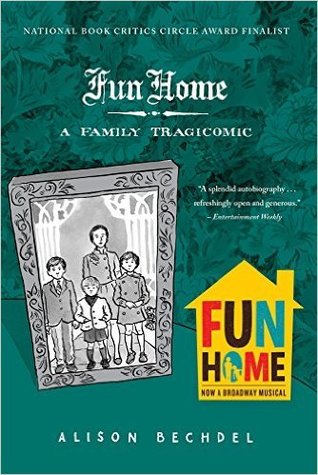
Fun Home: A Family Tragicomic by Alison Bechdel

In this graphic memoir, Alison Bechdel charts her fraught relationship with her late father.

Distant and exacting, Bruce Bechdel was an English teacher and director of the town funeral home, which Alison and her family referred to as the Fun Home. It was not until college that Alison, who had recently come out as a lesbian, discovered that her father was also gay. A few weeks after this revelation, he was dead, leaving a legacy of mystery for his daughter to resolve.


(Summary from goodreads.)


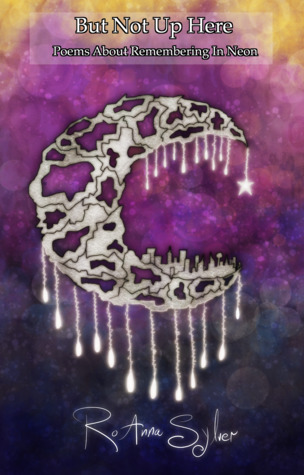
But Not Up Here: Poems About Remembering In Neon by RoAnna Sylver

Words about love, loss, grief, PTSD, and jokes with no punchline.
Steps toward finding yourself and singing down the stars.


(Summary from goodreads.)


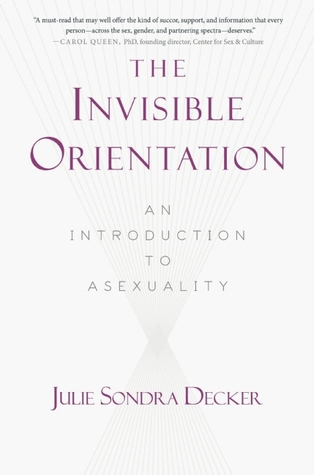
The Invisible Orientation: An Introduction to Asexuality by Julie Sondra Decker

What if you weren't sexually attracted to anyone?

A growing number of people are identifying as asexual. They aren't sexually attracted to anyone, and they consider it a sexual orientation—like gay, straight, or bisexual.


Asexuality is the invisible orientation. Most people believe that "everyone" wants sex, that "everyone" understands what it means to be attracted to other people, and that "everyone" wants to date and mate. But that's where asexual people are left out—they don't find other people sexually attractive, and if and when they say so, they are very rarely treated as though that's okay.


When an asexual person comes out, alarming reactions regularly follow; loved ones fear that an asexual person is sick, or psychologically warped, or suffering from abuse. Critics confront asexual people with accusations of following a fad, hiding homosexuality, or making excuses for romantic failures. And all of this contributes to a discouraging master narrative: there is no such thing as "asexual." Being an asexual person is a lie or an illness, and it needs to be fixed.


In The Invisible Orientation, Julie Sondra Decker outlines what asexuality is, counters misconceptions, provides resources, and puts asexual people's experiences in context as they move through a very sexualized world. It includes information for asexual people to help understand their orientation and what it means for their relationships, as well as tips and facts for those who want to understand their asexual friends and loved ones.


(Summary from goodreads.)

Mini Review: I first read this book before I came out as asexual, and it really helped me define my identity. It’s very informative without being prescriptive, and contains a good list of resources for further reading. I like that you can read the different sections of the book out of order, which makes it easy to get answers to some of your questions first before reading the whole book.

I would recommend this book to people who are still figuring out their identity and everybody who wants to be an ally to aces.

My Dear Boy: Gay Love Letters Through the Centuries by Rictor Norton

DEAR BOY is an anthology of gay love letters between illustrious men for almost 2,000 years. Correspondents include Marcus Aurelius, St. Anselm, Erasmus, Calvacanti, Michelangelo, Sir Phillip Sydney, King James I & VI, Thomas Gray, von Kleist, Byron, Hans Christian Andersen, Melville, Whitman, Tchaikovsky, Wilde, Henry James, Frederick Wm Rolfe, Wilfred Owen, Hart Crane, T. E. Lawrence, Cocteau, Auden, Pasolini, Allen Ginsberg, Wm Burroughs, among others.

(Goodreads link.)

Mini Review: If you like love letters and queer history, this book is for you! I haven’t finished it yet, but what I have read so far has been both sweet and sad.

If you’ve been counting, you’ll notice that this is book number 6. The reason I didn’t count it is that it is extremely hard to get in print, and there is no eBook available. However, you can read much of it for free on the author’s website.

I hope you found something on the list that looks interesting to you! I tried to get some different types of books so hopefully there’s something for everyone. Of course, there’s a lot more out there 

xoxo

Lucia

Thursday, July 6, 2017

QSR Guest Post: Luci's TBR List

Hi everyone!

In our last #qsrchat, I hinted that I was going to share my TBR for Queer Summer Reading with you, so without further ado, here it is:

1. read a book that represents (part of) your queer identity

CITY OF STRIFE (Claudie Arseneault)

Isandor, City of Spires.

A hundred and thirty years have passed since Arathiel last set foot in his home city. Isandor hasn’t changed—bickering merchant families still vie for power through eccentric shows of wealth—but he has. His family is long dead, a magical trap has dulled his senses, and he returns seeking a sense of belonging now long lost.

Arathiel hides in the Lower City, piecing together a new life among in a shelter dedicated to the homeless and the poor, befriending an uncommon trio: the Shelter’s rageful owner, Larryn, his dark elven friend Hasryan, and Cal the cheese-loving halfling. When Hasryan is accused of Isandor's most infamous assassination of the last decade, what little peace Arathiel has managed to find for himself is shattered. Hasryan is innocent… he thinks. In order to save him, Arathiel may have to shatter the shreds of home he’d managed to build for himself.

Arathiel could appeal to the Dathirii—a noble elven family who knew him before he disappeared—but he would have to stop hiding, and they have battles of their own to fight. The idealistic Lord Dathirii is waging a battle of honour and justice against the cruel Myrian Empire, objecting to their slavery, their magics, and inhumane treatment of their apprentices. One he could win, if only he could convince Isandor’s rulers to stop courting Myrian’s favours for profit.

In the ripples that follow Diel’s opposition, friendships shatter and alliances crumble. Arathiel, the Dathirii, and everyone in Isandor fights to preserve their homes, even if the struggle changes them irrevocably.


I’ve been wanting to read this since it came out, but my depression never left me the energy to immerse myself in a fantasy setting. I’m really looking forward to reading own voices aro rep! And it’s been far too long since I last read anything high fantasy…

1b. read an own voices queer book

NO MORE HEROES (Michelle Kan)

The peaceful nights are kept under the clandestine and watchful eye of young, gifted vigilantes the world over. But a sudden rash of vigilante deaths heralds the arrival of a new and unfamiliar enemy – one whose motive is as unclear as their identity. Someone or something seems determined to disturb the peace, and they're going straight for the watchmen to do it. In a city where those who are gifted make up their own rules, who will step forward when the threat of a swift end is real and there stands so little to gain?

No More Heroes is an urban fantasy action/adventure novel about young, would-be heroes who get more than they bargained for when they delve deeper into a world they never knew they were a part of. Featuring a diverse cast of players, discord, a mystery to be solved, plenty of literary action and high-stakes battles, No More Heroes is a story about self-belief and camaraderie, persistence in the face of trials, and what it means to be the best version of yourself.


I’ve heard so many great things about this book! Like with CITY OF STRIFE, I bought it months ago, but never got around to reading it. NO MORE HEROES also has own voices aro rep, and I’m really excited to meet all these fictional aros (and hold them in my heart forever!)

2. read a book that represents a different aspect of queerness

THE LIFELINE SIGNAL (RoAnna Sylver)

Parole is still burning. And now the day everyone has been waiting for is finally here: it’s collapsed. A lucky few managed to escape with their lives. But while their city burned, the world outside suffered its own devastating disaster. The Tartarus Zone is a deadly wasteland a thousand miles wide, filled with toxic storms, ghostly horrors, and just as many Eyes in the Sky as ever. Somehow, this new nightmare is connected to Parole. And it’s spreading.

Now Parole’s only hope lies in the hands of three teenagers reunited by their long-lost friend Gabriel - in their dreams. Growing up outside Parole, Shiloh Cole always had to keep xir energetic powers a secret, except from xir parents, Parole’s strategist-hero Garrett, and Tartarus expert Maureen. When Parole collapsed, all contact was lost. Now, connected by Gabriel and their colliding pasts, xie joins collapse survivor Annie and the enigmatic, charismatic Chance on a desperate cross-country race, carrying a disc of xir mother’s vital plans, whose encrypted contents may be Parole’s salvation. First they’ll board the FireRunner, a ship full of familiar faces that now sails through Tartarus’ poison storms. Together, they’ll survive Tartarus’ hazards, send a lifeline to lost Parole - and uncover the mystery connecting every one of them.

The world outside Parole isn't the one they remember, and it didn’t want them back. But they'll save it just the same. It's what heroes do.


If you know me at all, you’ve PROBABLY heard me talk about how much I love CHAMELEON MOON (if you haven’t: I love it SO MUCH). THE LIFELINE SIGNAL has been sitting on my shelf for a while now (do you notice a pattern?) because I’ve been scared to read on because I just know it will give me so many FEELINGS and AAAAA *flails* but I’m finally going to read it now. And cry, probably (don’t judge me).

2b. read a queer book that is set in a different country

THE CITY OF DEVI (Manil Suri)

Mumbai has emptied under the threat of imminent nuclear annihilation; gangs of marauding Hindu and Muslim thugs rove the desolate streets; yet Sarita can think of only one thing: buying the last pomegranate that remains in perhaps the entire city. She is convinced that the fruit holds the key to reuniting her with her physicist husband, Karun, who has been mysteriously missing for more than a fortnight.

Searching for his own lover in the midst of this turmoil is Jaz—cocky, handsome, and glib. "The Jazter," as he calls himself, is Muslim, but his true religion has steadfastly been sex with men. Dodging danger at every step, both he and Sarita are inexorably drawn to Devi ma, the patron goddess who has reputedly appeared in person to save her city. What they find will alter their lives more fundamentally than any apocalypse to come.


I’m supposed to be reading this book for a class, so I decided to combine “business” and pleasure and use it for this prompt ;)

3. read a queer book from a genre you read a lot

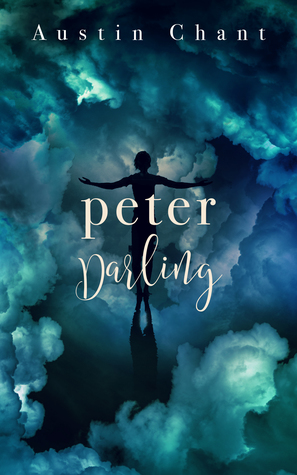
PETER DARLING (Austin Chant)

Ten years ago, Peter Pan left Neverland to grow up, leaving behind his adolescent dreams of boyhood and resigning himself to life as Wendy Darling. Growing up, however, has only made him realize how inescapable his identity as a man is.

But when he returns to Neverland, everything has changed: the Lost Boys have become men, and the war games they once played are now real and deadly. Even more shocking is the attraction Peter never knew he could feel for his old rival, Captain Hook—and the realization that he no longer knows which of them is the real villain.


Romances! I can’t get enough of them. I loved Austin Chant’s COFFEE BOY, and I loved what little I managed to read of PETER DARLING so far, but I made the mistake of starting it during a time when I had so much to do I could never find the time to read. I can’t wait to get back into it!

4. read a queer book from a genre you rarely read

DEAR HERCULINE (Aaron Apps)

Dear Herculine, a harrowingly eloquent cri de coeur, melds consciousnesses and bodies across one and a half centuries, from 1832–2014. Intersexed writer Aaron Apps to intersex reader, the long-dead martyr to early gender-reassignment surgery, Herculine Barbin, speaks from a place so far inside of the abjected subject that it comes out the other end as estranged, engorged and gorgeous language, in letters comprising ‘two intersexed bodies composed of multiple parts, and the mess of flesh and text that stands between.’ Unlike Yeats, who desired to be consumed in artifice to escape the human condition, that of being ‘sick with desire/ And fastened to a dying animal/[That] knows not what it is,’ Apps plunges into the carnal killing floor with his nineteenth-century interlocutor, binding their fates as he is ‘shackled to a rotting double, rotting in the space between, rotting in the space of the letters.’ Apps’s fearlessness and the beauty of his prose inspires, pushing poetry, kicking and screaming and expiring with shame, to where it desperately wants to go. A brilliant achievement that defies the triumphalism of that descriptor, Dear Herculine is a cache of love letters urgently needed to heal this world.

I’m not sure how I came across this book, but it sounds super interesting!

4b. read a queer comic/graphic novel

LUMBERJANES: BEWARE THE KITTEN HOLY (Noelle Stevenson)

Jo, April, Mal, Molly and Ripley are five best pals determined to have an awesome summer together... and they’re not gonna let any insane quest or an array of supernatural critters get in their way!

Someone bought me this off my amazon wishlist (thank you, friend!) and I haven’t found the time to read it yet. It seems fun and light-hearted, which makes it sound like a perfect summer read!


4c. read a queer nonfiction book

LUDWIG II.: DER UNZEITGEMÄSSE KÖNIG (Oliver Hilmes)

You might know that I’m super into musicals (I am so into musicals. Really. Ask me about it, I dare you) and I’m going to go see Ludwig2 – The Musical in August. Ludwig II. was King of Bavaria (where I live!) and queer, so this musical is like the perfect combination of my interests. However, I don’t expect there to be a lot of (historically accurate) information, so I decided to also read this biography to get a look into the real history behind the musical.

So, that’s my reading list for this summer! Is there anything that caught your eye? Do you already have ideas for what you’re going to read?

xoxo Lucia